Blog
Cooking ClassesBuild a Food Experience Funnel (Not Just a Class Page)
Published 2026-03-23
Thai Cooking Class. 3 hours. ฿1,500 per person. Includes market visit. Maximum 10 students. Morning and afternoon sessions available.
That is the entirety of most cooking class booking pages. All the facts. Zero feeling. And if you are wondering why people are browsing but not booking, this is exactly the reason.
You are listing information. Your competitors on Viator are selling a memory.
Information does not convert
Here is what happens when someone lands on your class page. They read the bullet points. They get the logistics. And then they open another tab to compare you with three other schools — because you have given them nothing to emotionally commit to.
Price, duration, group size. Every cooking class in Chiang Mai has roughly the same specs. When you compete on information alone, you become a commodity. And commodities compete on price, which is a race you do not want to run.
The cooking classes that book out weeks in advance are not necessarily better than yours. They are not cheaper. They are not in better locations. They just tell a better story on their booking page.
Sites that use narrative storytelling instead of bullet-point listings see 28% higher conversion rates on experience bookings. That is the difference between filling half your morning class and running a waitlist.
You are not selling a class
Let me reframe what you actually offer, because this is where most cooking school owners get stuck.
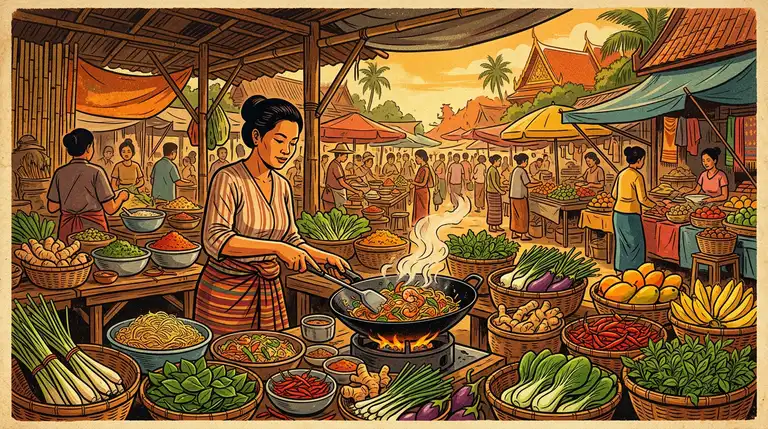
You are not selling three hours of instruction and a meal. You are selling the memory of walking through a market at 8am with the smell of lemongrass everywhere. You are selling the moment someone crushes their first curry paste by hand and realizes this is nothing like the jar from the supermarket. You are selling the photo they will post on Instagram — not of the food, but of themselves, grinning, holding a wok for the first time.
That is what people pay ฿1,500 for. The class is the vehicle. The memory is the product.
And your booking page needs to sell the memory, not the vehicle.
The experience funnel: how to structure your page
Think of your booking page not as a product listing but as a journey. You are walking the visitor through the experience before they have even booked it. By the time they reach the booking button, they should already feel like they have been there.
Open with the morning, not the menu
Instead of starting with “What you will learn” or “Class schedule,” start with the moment.
“Your morning starts at the oldest fresh market in Chiang Mai. You will walk with our chef through narrow aisles stacked with herbs, chilies, and vegetables you have never seen before. She will show you how to pick the right galangal, how to smell if a coconut is fresh, and why the aunties selling curry paste are the real experts.”
That is not a class description. That is a scene. The reader can see it. They can almost smell it. They are already imagining themselves there.
This matters because booking an experience is an emotional decision, not a logical one. People do not compare spreadsheets of cooking class features. They book the one that makes them feel something.
Show the transformation, not the itinerary
Nobody cares that the class runs from 9am to 12pm. They care about what they will be able to do at 12:01pm that they could not do at 8:59am.
“By the end of the morning, you will have made green curry from scratch — starting with a paste you ground yourself in a stone mortar. You will know the difference between Thai sweet basil and holy basil, and you will understand why one goes in a curry and the other goes in a stir-fry. You will go home with recipes, but more importantly, you will go home knowing you can actually do this.”
That is a transformation. That is a before-and-after. The person who arrives at 9am is different from the person who leaves at noon, and your page needs to make that difference vivid.
Use real photos, not stock images
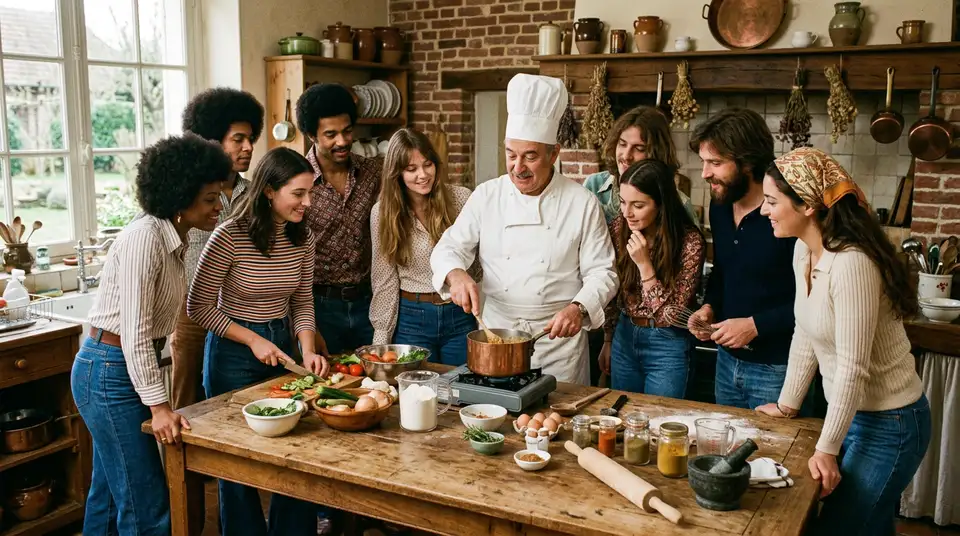
This is one of the simplest changes you can make, and it has an outsized impact. Real photos from actual classes — students laughing, hands covered in turmeric, a mortar being pounded, the finished dishes spread across a wooden table — convert at 3 times the rate of stock photography.
Three times. That is not a subtle difference. That is the difference between a page that works and a page that does not.
You do not need a professional photographer. A decent phone camera and good natural light are enough. Take photos during every class. Ask students if you can feature them. Build a library of real moments over time.
The goal is authenticity. Stock photos of beautiful Thai food look polished, but they also look like every other cooking class website on the internet. Your real photos look like your kitchen, your students, your specific experience. They cannot be copied.
Let past students do the selling
Testimonials are not optional. They are the single most powerful conversion element on any experience page.
But not all testimonials are equal. “Great class, highly recommend!” tells a potential booker nothing. What works is specific, emotional, detailed feedback.
“We booked this class on our last morning in Chiang Mai and it was the highlight of our entire trip. Chef Noi taught us to make som tam and we literally ate it standing around the mortar because it was too good to wait. My husband said it was the best meal he had in Thailand — and he made it himself.”
That is a testimonial that sells. It has a story, a name, a specific moment. It tells the next reader: this is what your experience could feel like.
Video testimonials are even more powerful. A 30-second clip of a couple saying “This was incredible” while holding their plates has been shown to increase trust by 72% compared to text reviews alone. Film these during class when people are happy, full, and glowing. It takes 15 seconds to ask.
End with a clear, single call to action
After the story, the photos, the testimonials — there should be exactly one thing to do: book.
Not “Contact us for availability.” Not “Send us an email.” Not “Check our Facebook page for updates.” One button. One action. “Book Your Class — Choose a Date.”
If possible, show a live calendar with available dates and times. Let people book and pay right there, on that page, in that moment of excitement. Every extra step between “I want to do this” and “I am confirmed” is a step where people drop off.
The average cooking class loses 40% of interested visitors at the payment step when the booking process requires more than two clicks. Two clicks. That is name-and-date, then pay. Anything beyond that is friction you cannot afford.
The content that feeds the funnel
Your booking page is the conversion point, but it needs traffic. And the best traffic — the kind that converts highest — comes from content that builds trust before someone ever sees the booking button.
Write about the food, not the class
A blog post titled “Why Thai Green Curry Tastes Different in Thailand” will attract thousands of food-curious travelers who are researching their trip. They are not searching for a cooking class yet. They are just reading about Thai food because they are excited about their upcoming trip.
At the bottom of that blog post, a simple line: “Want to learn how to make it yourself? Join our morning class in Chiang Mai.” That is the bridge from content to conversion.
This works because by the time they reach that line, they have already spent 3-4 minutes reading your expertise. They trust you. They know you understand Thai food. The class recommendation feels natural, not pushy.
Share the market experience
Write about the markets where you take your students. “A Guide to Warorot Market: What to Buy, What to Taste, What to Bring Home.” This is content that ranks on Google, attracts visitors planning their Chiang Mai itinerary, and positions your brand as the local expert.
Every piece of content is a door. Each one opens to a different audience, a different search query, a different moment in someone’s trip planning process. And every door leads, eventually, to your booking page.
Feature your chef’s story
People book experiences from people, not from businesses. If your chef grew up cooking with her grandmother in a village kitchen, that story is worth more than any ad campaign.
A page about your chef — her background, her philosophy about Thai food, what she loves to teach — humanizes the entire experience. It turns “Thai Cooking Class” into “A morning with Chef Noi.” One is a commodity. The other is irreplaceable.
The AI layer
The “let past students do the selling” section above is the conversion lever. The bottleneck is collecting the testimonials — most schools chase three or four students after class for a usable review and end up with “Great class, highly recommend!”
AI changes the bottleneck. After every class, students get a short follow-up message asking what stood out. Their replies — voice notes, scattered sentences, half-formed thoughts about the morning — get fed into a workflow that mines patterns across the last fifty replies and surfaces the specific moments students keep mentioning: the smell of the market, the curry paste they couldn’t believe they made, the photo holding the wok.
The same workflow drafts a clean testimonial line in the student’s voice from their actual reply. Not a fabrication — a 28-word version of what they actually said, ready to feature on the page. The student gets the draft for approval. Eight out of ten approve as-written. You go from three usable testimonials a year to twenty.
The booking page that wins on storytelling needs raw material. AI doesn’t write the story — it harvests the moments your students already lived.
What this looks like in practice
Let me map the full funnel so you can see how the pieces connect.
Top of funnel: A traveler reads your blog post about Thai street food. They are planning a Bangkok trip and looking for food recommendations. At the bottom of the post, they see a link to your cooking class.
Middle of funnel: They click through to your experience page. They read about the market visit, see photos of real students, watch a 30-second video testimonial. They are not comparing prices anymore. They are imagining themselves there.
Bottom of funnel: They click “Book Your Class,” choose a date that works with their trip itinerary, enter their details, and pay. The confirmation email arrives with practical details and a note: “We cannot wait to cook with you.”
After the experience: They leave a review. You send a follow-up email with their recipes and a class photo. They forward it to a friend planning a trip to Thailand. The funnel feeds itself.
This is not complicated technology. It is just the right pieces in the right order, each one designed to move someone from curious to committed.
The competitors who get this right
Look at the top-ranked cooking classes in any major tourist city. The ones booking out weeks in advance all do the same things.
They tell a story on their booking page. They use real photography. They feature reviews prominently. They make booking effortless. And they have content — blog posts, guides, recipes — that brings new visitors to their site every day without paying for ads.
They are not better cooks than you. They just have a better page.
Start here
You do not need to rebuild your entire website in a weekend. But you do need to stop treating your booking page like a classified ad.
This week: Rewrite the first paragraph of your class page. Delete the bullet points. Write the opening scene instead — the market, the smells, the moment. Make someone feel it.
This month: Replace your stock photos with real ones. Spend one class just taking photos. Hands in a mortar, steam rising from a wok, students laughing, the finished spread. Upload the best ten to your class page.
This quarter: Collect five detailed testimonials from past students. Not star ratings — stories. Ask them what moment stood out, what surprised them, what they still cook at home. Put these front and center on your page.
If you are showing up when tourists search, your funnel gets the traffic. If your page tells the right story, the traffic converts. That is the system.
You are not selling a class. You are selling the best morning of someone’s vacation. Your page should feel like it.