Blog
Real EstateWhy Property Listings Alone Don't Generate Leads
Published 2026-02-27
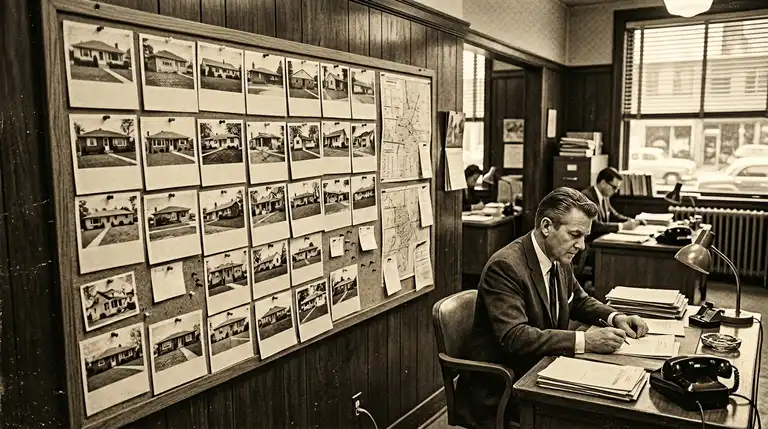
You have 40 listings on your website. Professional photos, floor plans, maybe even a virtual tour or two. Your traffic report says people are visiting. Google Analytics shows sessions, page views, time on site.
And then you check the inquiry form. Tumbleweeds.
How is that possible? People are clearly looking at your properties. They are spending time on the pages. But almost nobody is reaching out.
This is one of the most common frustrations in real estate, and it has nothing to do with your listings being unattractive. The problem is structural.
The gallery problem
Here is what most real estate websites look like from a visitor’s perspective. You land on a property page. There is a photo carousel, a price, a list of features (3 bed, 2 bath, 120 sqm), and somewhere near the bottom, a generic form that says “Contact Agent.”
That is it. That is the entire experience.
Now think about what just happened. You showed someone a product, gave them some specs, and asked them to commit to a conversation with a stranger. No context about the neighborhood. No sense of what their monthly payment would look like. No reason to act now rather than next week.
You built a gallery, not a sales tool. And galleries do not generate leads. They generate window shoppers.
The irony is that most agents spend enormous energy getting those listings looking perfect — and they should. Great photos matter. But the photos are doing their job. The problem is everything that comes after the photos.
Why “Contact Agent” does not work
Think about this from the buyer’s perspective for a moment.
They are browsing properties, probably on their phone, probably during lunch or late at night. They have looked at 20 listings across three different websites in the last hour. They are interested in your property, but they are not ready to talk to someone. Not yet.
“Contact Agent” asks them to make a commitment. It says: give me your name and number, and a salesperson will call you. For someone who is still in browsing mode, that feels like too much. They are not ready to be sold to. They just want more information.
So they do what everyone does in that situation. They save the listing mentally, tell themselves they will come back later, and never do.
This is not a traffic problem. It is a conversion problem. You have the attention, but you are losing it at the moment of truth because you only offer one action: talk to me.
The numbers behind the silence
The data makes this painfully clear.
97% of homebuyers use the internet in their property search, according to the National Association of Realtors 2024 report. So yes, people are searching online. That part is working.
But the average real estate website converts between 0.5% and 2% of visitors into leads. That means out of every 200 people who visit your listings, maybe one to four will actually fill out a form.
Meanwhile, agents who implement structured lead capture — multiple touchpoints, value-first offers, specific calls to action — see conversion rates of 5% to 8%. That is a 4x to 10x improvement from the exact same traffic.
Same listings. Same photos. Same properties. Completely different results. The only difference is what happens between “nice photos” and “get in touch.”
And here is the number that should keep you up at night: 70% of real estate leads go to the agent who responds first. Not the best agent. Not the agent with the best listings. The one who responds first. If your website is not capturing those leads in the first place, response time is irrelevant because there is nothing to respond to.
What visitors actually want
Before we get to the fix, it helps to understand what is going on in a buyer’s head when they land on your listing.
They are not thinking “I want to contact an agent.” They are thinking:
“What is this neighborhood actually like?”
“Can I afford this?”
“Is this property going to sell fast or can I take my time?”
“What are the schools like?”
“How much would the mortgage be?”
These are the questions running through their mind. And your property page answers none of them. It shows photos and specs, which are necessary but not sufficient. It is like a car dealership that lets you look at the car but will not let you sit inside it.
The fix is to give visitors what they actually want, in exchange for their contact information. Not behind a wall — that feels hostile. But as a value exchange that makes sense to both sides.
The fix: three conversion layers per listing
Every property page on your site needs more than one way to engage. Here is how to structure it.
Layer 1: The neighborhood guide
Create a downloadable neighborhood guide for each area you sell in. Not each property — each neighborhood. This is a simple PDF (or a dedicated page on your site) that covers:
- Average property prices and recent trends
- School ratings and distances
- Transport links and commute times to major employment areas
- Restaurants, parks, and amenities within walking distance
- Any planned developments that could affect value
To access the guide, visitors enter their email address. That is it. No phone number required, no obligation. Just a genuine exchange: useful local information for an email address.
This works because it matches what the visitor actually wants. They are researching the area, and you are helping them do it. You are positioning yourself as someone who knows this neighborhood inside out, not just someone who has a listing to push.
Writing one good neighborhood guide takes a couple of hours. Writing one for every area you sell in is the bottleneck most agents hit and skip. The AI layer removes the bottleneck — feed the workflow your transit data, school ratings, café density, and average prices, and get back a 600-word guide for each area in your voice. You read each one in five minutes, edit the one paragraph that didn’t quite land, publish. Twelve neighborhoods covered in an afternoon instead of twelve weekends.
Layer 2: Price drop and new listing alerts
Add a simple opt-in on every listing page: “Get notified if the price changes or similar properties become available.”
This captures people who are interested but not ready to act. They like the area, they like the price range, but this particular property is not quite right. Instead of losing them forever, you keep the connection alive.
When a new listing hits that matches their criteria, they hear from you first. When the price drops on a property they saved, they hear from you first. You become their personal property radar without lifting a finger.
Layer 3: Private viewing booking
Replace “Contact Agent” with something specific: “Book a private viewing.”
This is a small change that makes a big difference. “Contact Agent” is vague and feels like the start of a sales process. “Book a private viewing” is concrete and buyer-directed. It puts them in control. They are not asking for permission to talk to you — they are scheduling a specific activity.
Include a simple calendar integration so they can pick a day and time. The psychological shift is enormous. They go from “I might call someone eventually” to “I have an appointment on Thursday at 2pm.”
Putting it together
A property page that converts looks like this, from top to bottom:
- Hero image with price and key details (the hook)
- Photo gallery and virtual tour (the experience)
- Property story — not just specs, but why this home is interesting (the narrative)
- Neighborhood context with a link to the full guide (Layer 1)
- Floor plan and technical details (the specs)
- Price alert sign-up (Layer 2)
- Private viewing booking with calendar (Layer 3)
Three chances to capture a lead. Three different levels of commitment. The neighborhood guide catches browsers. The price alerts catch the curious. The viewing booking catches the ready.
You can learn exactly how to structure each of these sections in Turn Each Property Into a Conversion Funnel.
What happens to the leads you capture
Here is where most agents make the second mistake. They capture a lead and then treat every lead the same way: call them immediately and try to book a viewing.
But the person who downloaded a neighborhood guide is in a completely different headspace than the person who booked a viewing. If you call the guide downloader and push for a meeting, you will scare them off. If you send the viewing booker a drip email sequence, you will lose them to someone faster.
Different leads need different follow-up. The guide downloader gets a nurture sequence — helpful emails about the area, market updates, new listings that match their interest. The alert subscriber gets timely notifications when something changes. The viewing booker gets an immediate confirmation and a personal follow-up.
This is what qualifying your buyers before they contact you looks like in practice. The system sorts people by intent so you can respond appropriately.
The system view: why this matters beyond one listing
When you add conversion layers to every property page, something shifts in how your business works.
You stop relying on individual listings to generate phone calls. Instead, every listing becomes a lead generation tool, even the ones that do not sell quickly. A property that sits on the market for three months is not a failure — it is three months of capturing emails, building alert lists, and booking viewings for other properties in the area.
Your website stops being a brochure and starts being an asset. It works while you sleep, while you are showing properties, while you are negotiating contracts. It does not forget to follow up. It does not get tired on Friday afternoon.
And because you own the system — it lives on your website, not on a portal you do not control — you own the leads. When Zillow or Rightmove or whatever portal dominates your market decides to change the rules, raise prices, or sell your leads to three competing agents, you are not affected. Your leads come to you directly, through a system you built and control.
40 listings with no conversion layers is a gallery. 40 listings with three conversion layers each is a lead generation machine with 120 touchpoints working around the clock.
Same listings. Same photos. Completely different outcome.