Blog
SpasWhy Spa Websites Fail to Convert High-Value Clients
Published 2025-12-12
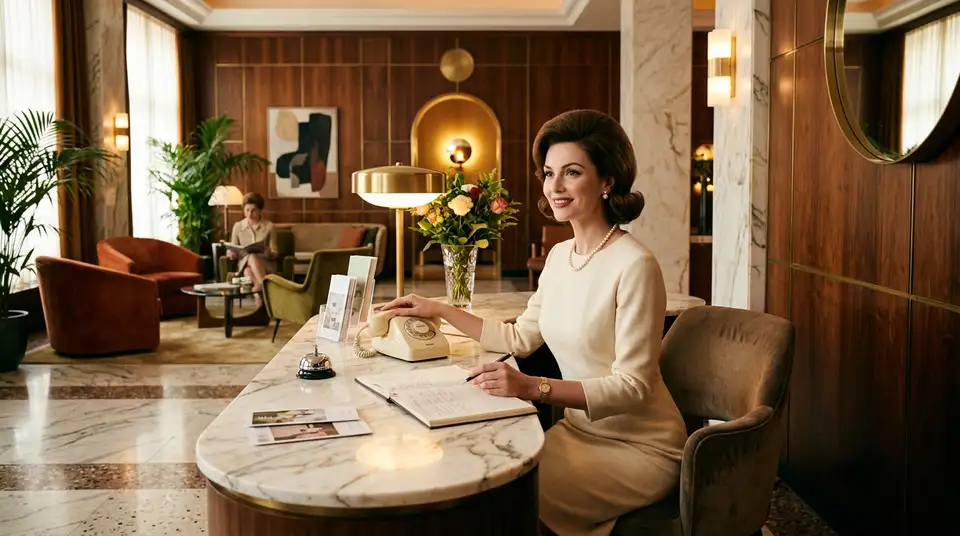
A woman is sitting on her couch on a Thursday night. She has had the week from hell. Her shoulders are concrete. She pulls out her phone and types “best spa near me.”
She is ready to spend ฿6,500. Maybe more. She wants someone to fix what this week did to her body.
Your website loads. She sees a stock photo of hot stones arranged in a line on someone’s back. The headline says “Relax. Rejuvenate. Restore.” There is a menu with 47 treatments listed in alphabetical order. No descriptions. No photos of your actual space. No indication of what makes you different from the place two blocks away.
She taps the back button. She is gone. And she is never coming back.
Every spa website looks the same
Go ahead and Google “spa near me” for your city right now. Open the first five results. I will wait.
What did you see? Candles. River stones. Maybe some bamboo. A woman with cucumbers on her eyes. And some variation of “Your Wellness Journey Starts Here.”
Now try to remember which one was which.
You cannot, because they are all the same. And if you, a spa owner, cannot tell them apart, imagine what your potential clients see. Nothing. They see nothing worth remembering, nothing worth choosing, nothing worth ฿6,500.
This is the core problem. The spa industry has accidentally created a visual and verbal monoculture online. Everyone uses the same stock photos, the same language, the same layout. The result is that nobody stands out, and the client defaults to whoever is cheapest or closest.
That is a terrible position to be in if you are trying to attract high-value clients.
The numbers behind the problem
88% of consumers research online before booking a wellness service. That is from the International Spa Association’s 2024 industry report. Not “before visiting your website” — before handing you their credit card. Your website is the audition, and right now, most spas are bombing it.
Here is where it gets painful. The average spa website converts at about 1.8%. That means for every 100 people who land on your site, fewer than 2 actually book something. The top-performing spa websites? They convert at 7%. Same industry. Same services. Nearly 4x the bookings.
What are those top performers doing differently? Three things, according to the data.
Premium clients are 3x more likely to book when they see detailed treatment descriptions instead of just a name and price. They want to know what is going to happen to their body, what products you use, and what the experience will feel like.
Websites with practitioner bios and photos convert 2.4x better than those without. People are about to let a stranger touch their body for an hour. They want to see who that person is. They want to feel safe before they walk through your door.
And original photography — your actual space, your actual team, your actual treatment rooms — outperforms stock imagery by a factor of nearly 3 in terms of engagement and conversion.
So the playbook is clear. The question is why almost nobody follows it.
You are selling the wrong thing
Here is the deeper issue. Most spa websites sell services. “60-minute Swedish massage. ฿2,800.” That is not what people are buying.
Nobody wakes up wanting a Swedish massage. They wake up wanting their back to stop hurting. They want to feel human again after two weeks of twelve-hour days. They want to walk out feeling like a different person than the one who walked in.
You are selling the transformation, not the service. But your website sells the service.
Look at your treatment list right now. I bet it reads like a restaurant menu written by someone who does not like food. Names, durations, prices. Maybe a one-line description that says something like “A relaxing full-body massage using Swedish techniques.”
That description tells me nothing I could not have guessed from the name. It does not make me feel anything. It does not help me understand why I should choose this over the deep tissue option, or why your version of this is worth driving past three other spas to get to.
What transformation sounds like
Compare “60-minute Swedish Massage — ฿2,800” with this:
“If your body has been holding onto a week’s worth of stress, this is where you let it go. Sixty minutes of slow, deliberate work focused on releasing tension from your neck, shoulders, and lower back — the places that absorb everything you carry. Most clients tell us they sleep better that night than they have in weeks.”
Same service. Same price. Completely different emotional response.
The first version is a line item. The second version is a promise. High-value clients buy promises, not line items.
The fix: what actually converts
Let me be specific about what the top-performing spa websites do, because none of this requires a huge budget or a web development degree.
Lead with the transformation, not the service list
Your homepage should not open with a treatment menu. It should open with a clear statement about what changes when someone walks through your door.
Not “We offer 35 treatments for mind and body.” Try “You have been carrying this weight long enough. Let us take it off your shoulders.”
The treatment list comes later, after you have made them feel understood.
Build real treatment pages
Every signature treatment deserves its own page. Not a line in a dropdown. A full page with a description of what happens during the session, what the client will feel, what products or techniques you use, and who it is best for.
Think of each treatment page as a conversation with a nervous first-time client. They want to know: What is going to happen? Will it hurt? What should I expect afterward? How is this different from the same thing at a cheaper place?
Answer those questions and you will convert at a rate most spas never touch. This is also where smart packaging starts to pay off — once a client is on a treatment page and feeling understood, a well-structured package is an easy upsell.
Show your people
Your practitioners are your product. A spa is not a factory. It is a deeply personal service delivered by individual humans with specific skills and personalities.
Put their faces on your website. Write a short bio for each one. Mention their training, their specialties, what they are like as a person. “Maria has been a licensed massage therapist for 12 years and specializes in deep tissue work for athletes. She is also unreasonably good at finding the exact knot you did not know you had.”
That last sentence does more conversion work than your entire homepage banner.
Use real testimonials, placed strategically
Not a testimonials page that nobody visits. Put the right testimonial on the right treatment page.
A review that says “I came in with a migraine and left feeling like a new person” belongs on your tension relief treatment page. A review that says “The couples massage was the highlight of our anniversary trip” belongs on your couples page.
Generic five-star ratings on a separate page do almost nothing. Specific testimonials placed in context do everything.
Invest in real visuals
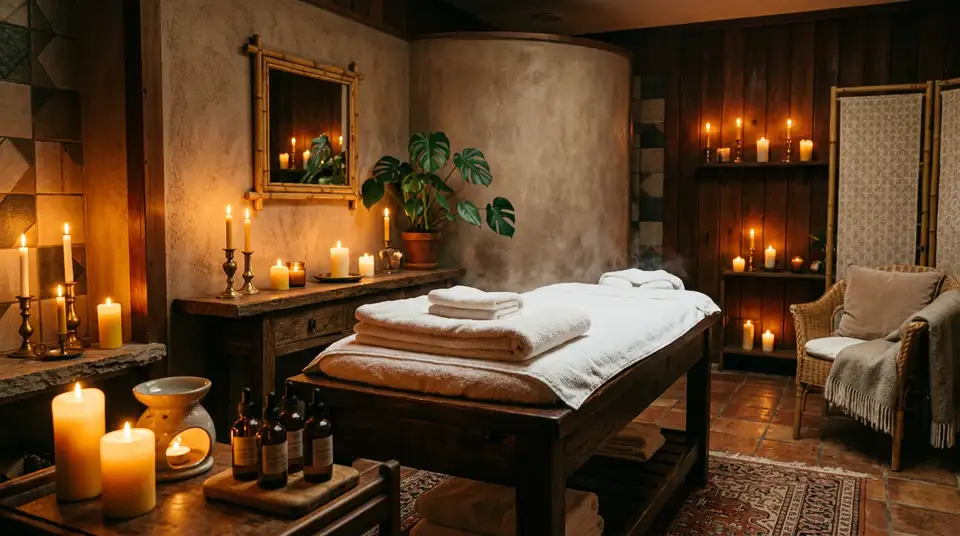
One afternoon of intentional photography will transform your website. Shoot your actual space. Shoot your practitioners working (with client permission). Shoot the details — the folded towels, the oils lined up, the soft lighting in your treatment room.
If you want to go deeper on this, I wrote a full guide on how visual content sells the spa experience before a client ever walks through the door.
The AI layer
Premium clients don’t book on the first visit. They browse, leave, come back twice, fill in the contact form on the third trip. Most spa systems treat that contact form as the end of the funnel. With AI, it’s the start of one.
The form scores itself as it submits. A prospect who spent four minutes on the bridal-package treatment page, opened two practitioner bios, and typed a real question in the message field gets tagged “high-intent” before your inbox even pings. A prospect who landed from a discount platform and asked about pricing gets tagged differently. Your manager sees both, but they’re sorted — the high-intent ones surface first.
The follow-up writes itself in your voice. The system has read every reply you’ve sent in the last six months — your phrasing, your warmth, your concrete next steps — and drafts the first message back. Your name on the email, your sentences, your tone, drafted in three seconds. You read it, edit one word, send. The prospect gets a real-feeling reply within fifteen minutes of submitting.
Top-converting spas don’t have better leads. They have faster, warmer, more personal first replies — at scale.
The system view: why this matters beyond your website
Here is the bigger picture. When your website looks like every other spa website, you are invisible. And when you are invisible, the only way to get clients is to pay for them — through ads, through discount platforms, through aggregator sites that take a cut of every booking.
That is a rented audience on a rented platform. You are paying rent every single month just to be seen, and the moment you stop paying, you disappear.
A website that actually differentiates you — that shows real people, real results, real personality — is an owned asset. It works for you 24 hours a day. It compounds over time as Google learns that people stay on your site, engage with your content, and book your services.
The spas converting at 7% are not spending more on marketing than you are. They are spending less. Because their website does the selling for them.
Every hour you invest in making your treatment pages specific, your practitioner bios human, and your imagery real is an hour that pays you back for years. Every month you spend with a generic stock photo website is a month where you are invisible to the exact clients who would happily pay your premium prices.
The woman on her couch on Thursday night is searching right now. She is ready to spend the money. The only question is whether she can tell the difference between you and everyone else.
Make sure she can.