Blog
How to Turn One Business Update Into Website, Google, WhatsApp, and Social Content
Published 2026-07-12
Most small businesses do not have a content problem.
They have a workflow problem.
The content already exists inside the business:
- the restaurant has a new lunch set
- the spa has a seasonal package
- the gym has a beginner program starting Monday
- the real estate agency has a new listing
- the clinic has updated consultation hours
- the cooking class has a new market visit route
The problem is that every update becomes a separate job.
Someone has to update the website. Then write a Google Business Profile post. Then send a WhatsApp message. Then make an Instagram caption. Then maybe tell staff what to say when customers ask.
Because that is too much work, the update usually goes to one place and dies there.
The restaurant posts it on Instagram, but the website menu stays old. The spa mentions the package in WhatsApp, but Google never sees it. The gym updates the schedule PDF, but nobody turns it into a useful post. The real estate listing goes to a portal, but the agency website stays thin.
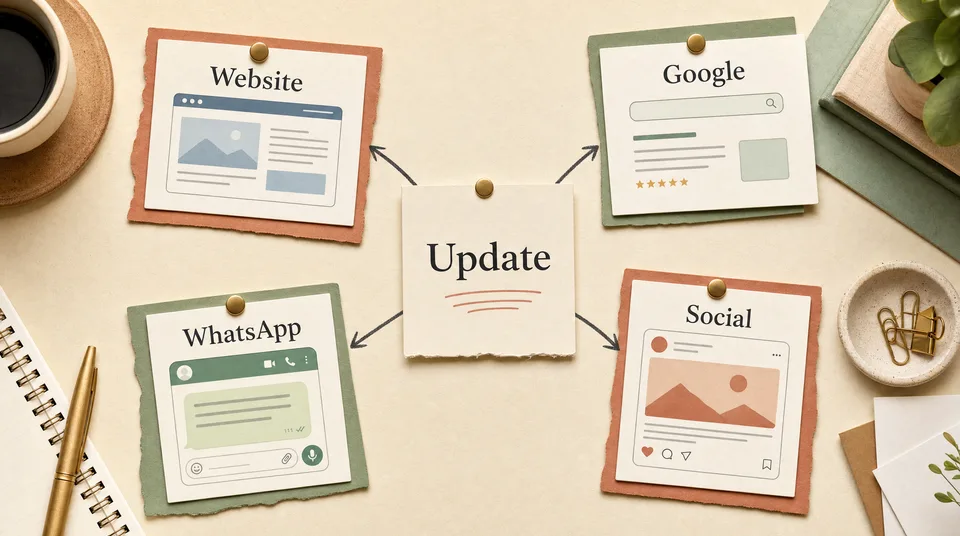
A better system starts with one source update and turns it into channel-specific drafts.
AI is useful here because it can reshape the same information for different contexts. The owner still approves the facts. The workflow removes the copy-paste work.
Start with the source of truth
Do not start with Instagram.
Start with a source update.
That update should be plain and factual:
Update type: new restaurant lunch set
Business: Thai restaurant in Phuket
Offer: grilled chicken lunch set
Includes: grilled chicken, green papaya salad, jasmine rice, iced tea
Price: ฿290
Available: Monday to Friday, 11:30 to 14:30
Goal: bring office workers in for weekday lunch
Photo: new dish photo from kitchen
Important note: limited to 30 sets per day
This is not marketing copy. It is the raw material.
For a spa, the source update might be:
Update type: seasonal treatment package
Package: Rainy Season Reset
Includes: 60-minute massage, herbal compress, hot tea
Price: ฿3,200
Available: weekdays in August
Goal: fill quiet afternoon slots
Important note: not available Saturday or Sunday
For real estate:
Update type: new listing
Property: 2-bedroom condo near BTS
Price: ฿8.9M
Best feature: morning light and quiet corner unit
Viewing: private viewing available this week
Goal: attract owner-occupier buyers
Important note: no pets allowed by building rules
The workflow should treat this source update as the truth. Every channel draft comes from it.
Channel 1: the website update
The website version should be clear, searchable, and durable.
It is not a caption. It is the place customers can return to and trust.
For the restaurant lunch set, the website update might be:
New weekday lunch set

Available Monday to Friday from 11:30 to 14:30. The set includes grilled chicken, green papaya salad, jasmine rice, and iced tea for ฿290. Limited to 30 sets per day.
For a gym program:
Beginner strength program starts Monday

A four-week program for new members who want to learn safe lifting technique, build confidence, and train with structure. Sessions run Monday and Wednesday evenings. Book a beginner assessment before joining.
The website version should include:
- what changed
- who it is for
- price or timing if relevant
- availability
- the next step
This is the version Google can index, customers can reference, and staff can point to.
Channel 2: the Google Business Profile post
Google Business posts need the important details quickly.
People see them when they are already comparing options or looking for directions. They are not reading a long story.
For the restaurant:
New weekday lunch set available Monday to Friday, 11:30 to 14:30. Grilled chicken, green papaya salad, jasmine rice, and iced tea for ฿290. Limited to 30 sets per day.For a clinic:
Updated consultation hours this month: weekday appointments now available until 19:00 on Tuesday and Thursday. Book ahead to reserve an evening slot.For a cooking class:
Our morning class now includes a guided visit to the fresh market before cooking. Available Monday, Wednesday, and Friday. Book direct for current dates.The Google version should be factual and local. Avoid cleverness. Include availability and the action.
Channel 3: WhatsApp or email
WhatsApp and email are direct channels. The message should feel like it came from the business, not a billboard.
For the spa package:
Hi, we have opened a weekday Rainy Season Reset package for August: 60-minute massage, herbal compress, and hot tea for ฿3,200. It is designed for quiet afternoon recovery and is available Monday to Friday only. Would you like me to send the available times this week?For a restaurant:
Hi, we have a new weekday lunch set from 11:30 to 14:30: grilled chicken, papaya salad, jasmine rice, and iced tea for ฿290. We only prepare 30 sets per day. If you want to come with your office team this week, reply with the day and party size.This version can be warmer because it goes to people who already know you.
It should still be short. The goal is a reply, not applause.
Channel 4: social caption
Social content should lead with the visual or moment.
For the cooking class:
The best part of the morning starts before the cooking begins.

Our market visit is now part of selected morning classes. You will pick herbs, smell curry paste, learn what to look for, then cook with the ingredients you just chose.

Available Monday, Wednesday, and Friday. Book direct through our website.
For real estate:
Morning light, quiet corner, two bedrooms near BTS.

This new listing is built for someone who wants the convenience of the city without feeling pressed against it. Private viewings available this week.
The social version can be more sensory or story-driven, but it should not invent details. AI can improve phrasing. It should not make up atmosphere, amenities, discounts, or urgency.
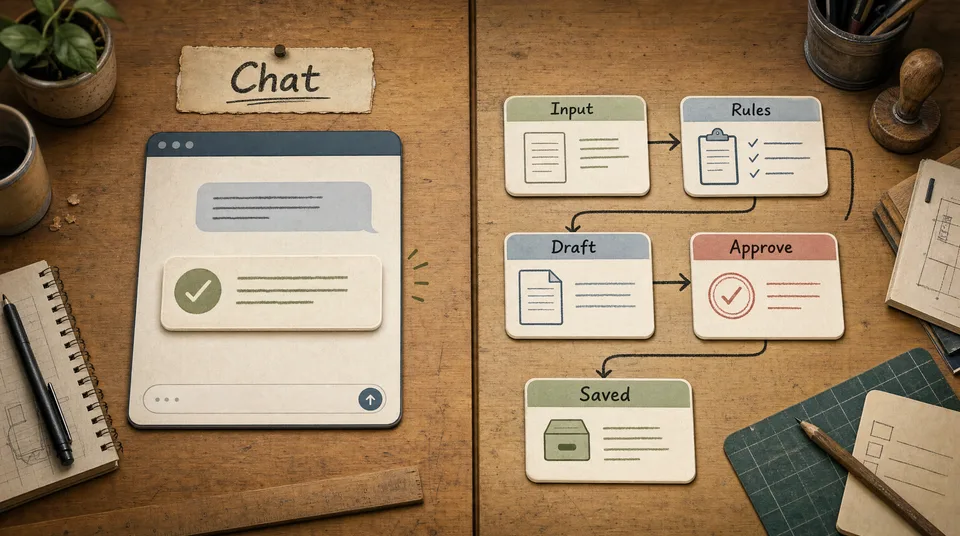
The approval workflow
The safest workflow has two approval moments.
First, approve the source update.
Check:
- price
- date
- availability
- location
- restrictions
- photo
- next step
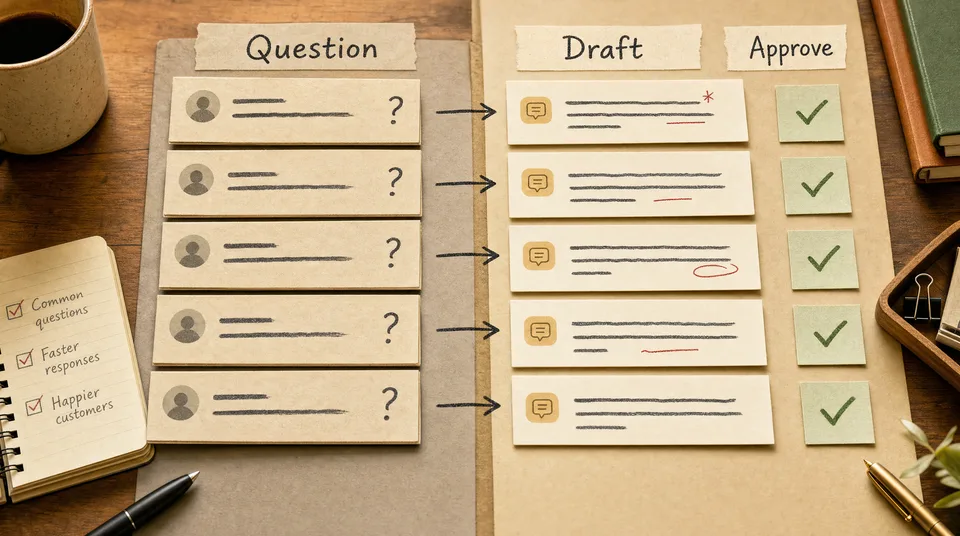
Second, approve the channel drafts.
Check:
- no invented details
- no wrong dates
- no promises the team cannot keep
- tone fits the channel
- CTA is clear
Only after approval should anything publish or send.
This keeps the owner in control while still removing most of the repetitive writing.
The template
Use this whenever the business has an update:
Update type:
Business vertical:
What changed:
Who it is for:
Price:
Dates or availability:
Main benefit:
Important restrictions:
Photo or visual:
Primary action:
Channels needed:
- Website
- Google Business Profile
- WhatsApp or email
- Social caption
Tone:
Facts that must not change:
Then ask the workflow to draft:
Turn this source update into four drafts:
1. Website update: clear, searchable, direct.
2. Google Business Profile post: short, factual, local.
3. WhatsApp/email message: warm, direct, reply-oriented.
4. Social caption: visual, concise, no invented details.

Keep all prices, dates, availability, and restrictions exactly as written.
Do not invent discounts, urgency, features, or customer outcomes.
End each draft with a clear next step.
That is enough for a first version.
Examples across different businesses
A restaurant updates the website menu first. The Google post announces the lunch set. WhatsApp goes to regular office customers. Instagram uses the dish photo. Staff see the same source update, so nobody quotes the wrong price.
A spa adds the package page first. Google announces weekday availability. WhatsApp goes to past clients who booked similar treatments. Instagram shows the treatment room and tea detail. The booking flow links directly to the package.
A gym updates the program page first. Google announces the start date. Email goes to old trial leads. Social shows a trainer demonstrating beginner technique. The form routes new leads into a beginner assessment.
A real estate agency updates the property page first. Google is less important, but email and social pull from the same listing story. WhatsApp drafts a message for buyers who asked for similar units. The property page remains the full source.
A clinic updates the consultation page first. Google announces new hours. Email goes to patients waiting for evening slots. Social stays simple and avoids medical claims. Staff use the approved note when answering calls.
A cooking class updates the class page first. Google announces the new market route. Email goes to travelers who asked about dates. Social shows the market moment. The website handles the booking.
Different channels. Same source.
What not to automate
Do not let AI publish every update automatically.
The owner or manager should approve:
- prices
- availability
- medical or wellness claims
- property details
- limited offers
- cancellation rules
- anything that affects operations
AI can draft quickly, but the business is responsible for the promise.
That is why the source update matters. If the source is correct, the drafts are much easier to trust.
What to measure
After 30 days, look at:
- how many updates were published to the website first
- how many channels each update reached
- which channel created replies or clicks
- whether staff quoted consistent details
- how long updates took from idea to publish
The goal is not to post more for the sake of posting.
The goal is to stop wasting the updates your business already creates.
The point
One update should not become four separate writing jobs.
Your website should hold the source. AI should reshape the update for each channel. Your team should approve the drafts and publish with confidence.
That is how a small business stays current without turning the owner into a full-time content manager.
If this is the workflow your business needs, start with the content engine workflow.