Blog
RestaurantsHow to Capture Every Customer Who Walks Into Your Restaurant
Published 2026-01-23
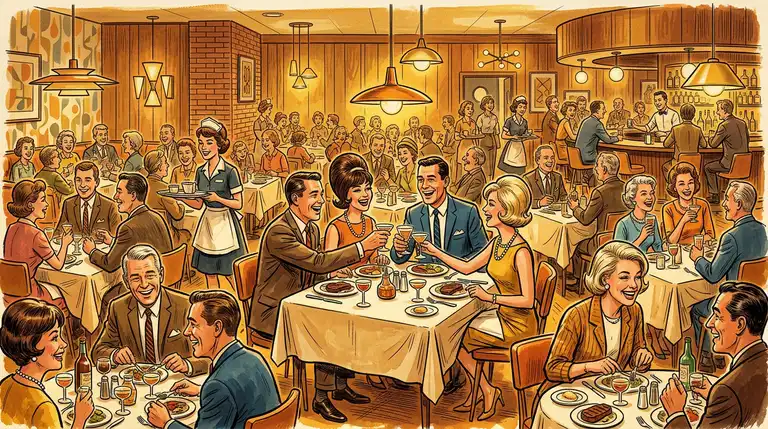
100 people ate at your restaurant last Friday night. You crushed it. The kitchen was firing on all cylinders, the front of house was smooth, and people were genuinely happy.
Now here is the question that matters: how many of those 100 people can you contact today?
If the answer is zero, you are running a business with a hole in the bottom. Money comes in, but it drains right back out because you have no way to bring those people back.
The leaking bucket problem
Think about what happens after a great dinner. Your guests pay the bill, maybe leave a nice tip, walk out the door, and… that is it. They vanish. You have no name, no phone number, no email. Nothing.
You are left hoping they remember you next time they are hungry. Hoping they do not get distracted by the new place that opened two blocks away. Hoping their Instagram algorithm shows them your post.
Hope is not a business strategy.
Meanwhile, you are spending money every single week trying to attract new people. Running Instagram ads. Doing promotions on delivery apps that take 30% of your revenue. Paying for Google visibility. All of that effort goes toward bringing in strangers, while the people who already love your food walk away with no connection to you.
This is what a leaking bucket looks like. You keep pouring water in at the top, but the bucket never fills because the bottom is wide open.
The numbers tell the real story
Here is why fixing this matters more than almost anything else in your business.
Acquiring a new customer costs 5 to 7 times more than retaining an existing one. Read that again. Every dollar you spend chasing new customers, you could spend 15 cents keeping the ones you already have.
Returning customers spend 67% more than first-time visitors. They order the wine. They get dessert. They bring friends. They do not agonize over the menu because they already trust you.
And here is the one that changes everything: WhatsApp messages have a 98% open rate. Compare that to email at around 20%, or Instagram posts that reach maybe 5% of your followers if you are lucky.
So the math is simple. If you can capture a customer’s WhatsApp contact, you have a direct line to someone who already likes your food, who costs almost nothing to bring back, and who will spend significantly more when they return.
Why restaurants ignore this
You might be thinking: “I know retention matters, but I am running a restaurant. I do not have time to build a CRM.”
Fair enough. But the reason most restaurants do not capture customer information has nothing to do with time. It is that they do not have a system.
Without a system, capturing customer data means asking your servers to do something extra during the busiest part of their shift. It means clipboards at the host stand that nobody fills out. It means loyalty cards that end up in the washing machine.
None of that works because it relies on human memory and motivation at the worst possible moment — when everyone is slammed.
What you need is something that works automatically, takes zero effort from your staff, and gives the customer a reason to participate.
The fix: QR to WhatsApp in 5 minutes
Here is the system, step by step. You can set this up in a single afternoon.
Step 1: Create the QR code
Put a small, attractive QR code on every table. You can print them on table tents, stickers, or even directly on the menu. If you have already set up a QR-based digital menu, you are halfway there — just add the opt-in step to the same flow.
The QR code links to a simple page (on your own website, not a third-party app) that says something like:
“Get 10% off your next visit. Join our VIP list on WhatsApp.”
That is it. No long forms. No app downloads. One tap.
Step 2: The WhatsApp opt-in
When they scan, they land on your page and click a button that opens WhatsApp with a pre-filled message. Something like “Hi, I’d like to join the VIP list!”
Your WhatsApp Business account receives the message, and now you have their contact. An automated reply confirms the opt-in and delivers the discount code.
Total effort from the customer: about 15 seconds. Total effort from your staff: zero.
Step 3: The automated follow-up
Two days after their visit, an automated message goes out: “Thanks for dining with us! Here is your 10% off code for next time. Valid for 30 days.”
This is not spam. This is a personal thank-you from a place they already enjoyed. And that 30-day window creates a gentle reason to come back soon.
Step 4: Birthday messages
When someone opts in, ask one optional question: “When is your birthday?” Most people will share it because everyone loves birthday perks.
Now you have a reason to reach out once a year with something special: “Happy birthday, Maria! Come celebrate with us — dessert is on the house this week.”
Birthday messages have some of the highest engagement rates in all of marketing. And they cost you virtually nothing — one dessert in exchange for a table of four or five people coming in for a birthday dinner.
Step 5: Event invitations and specials
Running a wine tasting next month? Launching a new seasonal menu? Having a live music night?
You now have a list of people who have already eaten at your restaurant and opted in to hear from you. One WhatsApp broadcast, sent at 11am when people are thinking about dinner plans, and you have a full house.
No algorithm deciding who sees your post. No ad budget required. Just a direct message to people who want to hear from you.
What this looks like after 90 days
Let us do some conservative math.
Say you serve 400 covers a week. If just 15% of them scan the QR and opt in, that is 60 new contacts per week. After 90 days, you have about 780 contacts on your WhatsApp list.
Now imagine you send one message per week — a special, an event, a seasonal menu update. With a 98% open rate, roughly 764 people see it. If just 5% of them come in because of that message, that is 38 extra covers per week.
At an average ticket of ฿1,500, that is ฿57,000 in extra weekly revenue. From one message. That you sent in 2 minutes.
Over a year, that is nearly ฿3 million in additional revenue from a system that cost you essentially nothing to set up.
The AI layer
The QR-to-WhatsApp loop captures contacts and lets you broadcast. The next leverage point is treating those 780 contacts as 780 different conversations, not one mass list.
Behaviour segmentation. AI reads your order history (if your POS is connected), your WhatsApp opt-in dates, and your reservation data. It groups your list into clusters that actually matter — Thursday-night regulars, weekend brunch families, wine-tasting attendees, special-occasion bookers. Not three crude segments built by hand. Twelve real ones, drawn from how people actually behave in your restaurant.
Drafted re-engagement messages. Each segment gets its own draft message every week, written in your voice, tuned to what that segment cares about. The Thursday-night cluster gets the new ramen special. The wine-tasting cluster gets early access to the vintage release. The brunch families get a kid’s-menu seasonal update. You see all twelve drafts in one view. You approve, edit, or skip each. Ten minutes per Sunday evening.
The QR code captures the customer. AI tells you what to say to them — and writes the first version.
The ownership difference
Here is the part that matters most, and it connects to everything we talk about when we discuss building a restaurant that markets itself.
Those 780 WhatsApp contacts? They are yours. Not Instagram’s. Not Google’s. Not Uber Eats’.
If Instagram changes its algorithm tomorrow (and it will), your reach drops to nothing. If Google decides to show a competitor above you, your phone stops ringing. If a delivery app raises its commission to 35%, your margins disappear.
But your WhatsApp list? Nobody can take that from you. Nobody can change the rules on you. Nobody can put themselves between you and your customer.
This is the difference between renting attention and owning relationships. Every platform you do not control is rented ground. Your website, your WhatsApp list, your customer database — that is owned ground.
Common objections (and honest answers)
“Won’t people think it’s annoying?”
Only if you spam them. One message a week, with genuinely useful content (specials, events, seasonal news), is not annoying — it is a service. People opted in because they like your restaurant. Respect that by sending things they actually want to see.
“We tried a loyalty program and nobody used it.”
Loyalty cards fail because they add friction. You have to carry a card, remember to stamp it, then remember to redeem it. The QR-to-WhatsApp system removes all of that friction. It lives in an app they already use every day.
“We don’t have someone to manage this.”
After the initial setup, this takes about 10 minutes a week. Write one message, hit send. If you can text a friend, you can do this. And once you combine it with the daily content loop, it becomes part of a system that practically runs itself.
“What about GDPR / privacy?”
WhatsApp opt-in is explicit consent. They are literally sending you a message saying “I want to be on your list.” Keep a record of opt-ins, include an easy way to unsubscribe in every message, and you are well within the rules.
The system view
Step back for a second and look at the bigger picture.
Your restaurant already does the hardest part of marketing: it creates an experience people enjoy. The food is great. The atmosphere is right. People leave happy.
The only thing missing is the connection between that experience and the next visit. That is what this system creates.
Every customer who walks through your door should leave as a contact in your system. Not a hope that they will come back. Not a prayer that the algorithm will show them your post. A real, direct relationship that you can nurture on your own terms.
The QR code captures them. The automated follow-up nurtures them. The weekly message keeps you top of mind. And because you own the channel, nobody can get between you and your customer.
This is one piece of a larger system. Your digital menu gives you control over what customers see and order. Your capture system turns one-time visitors into repeat guests. And your marketing loop keeps all of it running with minimal daily effort.
Each piece works on its own. Together, they create a restaurant that does not just serve great food — it builds a business that grows itself.