Blog
RestaurantsThe QR Menu Is Not About Convenience — It's About Control
Published 2026-01-09
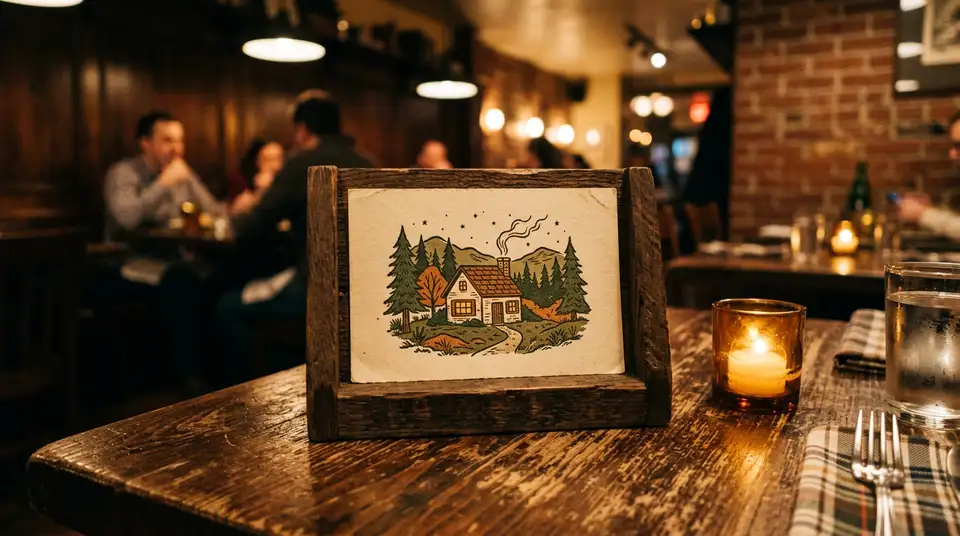
Sometime in 2020, you printed QR codes for every table. Maybe it was a COVID thing. Maybe your printer broke and you needed a fast fix. Either way, customers pull out their phones, scan the code, and see the menu.
Smart move. But you are only using about 10% of what those QR codes can do.
Right now, your QR code is a shortcut to a PDF. That is like buying a commercial kitchen and only using it to reheat leftovers.
The QR code revolution that never happened
62% of restaurants adopted QR menus after 2020. That is a massive shift. Millions of restaurants, billions of table scans, an entirely new behavior that customers now expect and prefer.
But here is the part nobody talks about: less than 8% of those restaurants use QR codes to capture any customer data at all.
That means 92% of restaurants have a direct digital connection to every person sitting at every table — and they are doing nothing with it except showing a menu.
Every scan is a customer raising their hand and saying, “I’m here, I’m interested, I have my phone out.” And the restaurant’s response is: “Here’s a PDF. Good luck.”
Where your data is actually going
Let me ask you something. When a customer scans your QR code, where does it send them?
If the answer is a third-party platform — one of those QR menu services that hosts your menu on their domain — then here is what is happening behind the scenes.
That platform is collecting data on every scan. They know when people visit, how long they look at the menu, which items get the most attention, what times are busiest. They know your customers better than you do.
And that data belongs to them. Not to you.
Some of these platforms use that aggregated data to sell advertising. Some use it to recommend competitors. Some just hold it as leverage for when you want to cancel your subscription.
You are paying a monthly fee to give someone else your customer data. That is not a tool. That is a bad deal.
The scan is the moment
Think about what happens when a customer scans a QR code at your table. They have their phone in their hand. They are in your restaurant. They are about to spend money. They are engaged and attentive.
This is the single highest-intent moment in your entire customer relationship. They are not scrolling past your content on social media. They are not half-reading an email on the bus. They are sitting in your restaurant, phone out, ready.
And you are sending them to a static PDF.
What if that scan went to your own website instead? Your menu page — the one that actually works — with a small, unobtrusive prompt at the top or bottom.
Not a popup. Not a gate. Just a gentle offer: “Want our weekly specials in your inbox?” or “Get a free appetizer on your next visit — join our list.”
A customer who is already eating your food and enjoying the experience is the easiest person in the world to convert into a repeat customer. You just have to ask.
The math of repeat customers
Restaurants that capture customer email or phone numbers see 23% higher repeat visit rates compared to those that do not. Let that number settle in.
Your average customer spends — let’s say — ฿1,500 per visit. If they come once, that is ฿1,500. If your system brings them back just two more times this year, that is ฿4,500. Multiply that across the hundreds of people who scan your QR code every month.
A single QR code, pointing to the right place, doing the right thing, can be worth hundreds of thousands of baht per year in repeat business. Not because the technology is magic, but because you are finally capturing the relationship instead of letting it walk out the door.
The fix: QR to your website, not someone else’s platform
Here is the system. It is straightforward, and every piece serves a purpose.
The QR code points to your website
Not a third-party platform. Not a PDF. Your website, your domain, your menu page. You own the traffic, you own the data, you own the relationship.
When a customer scans, they land on a page you control. It loads fast, it looks great on their phone, and it shows them exactly what they came for: the menu.
The menu page does double duty
The primary job is showing the menu. That job has to be done well — fast loading, easy to read, organized by section, with descriptions that make people hungry. We covered this in detail in the menu sales engine post.
The secondary job is the soft capture. Not a wall. Not a gate between the customer and the menu. A small prompt — at the bottom of the page, or as a gentle banner after they have been scrolling for a few seconds.
“Get our weekly specials by email.” “Join our WhatsApp list for table availability.” “First to know when our seasonal menu drops.”
The offer has to be genuinely useful. Nobody wants “restaurant spam.” But everyone wants to know when their favorite place has something special.
The capture feeds your owned channels
Every email address, every WhatsApp opt-in, every phone number goes into your list. Not a platform’s list. Yours.
Now you have a direct line to people who have already been to your restaurant, already eaten your food, and already said “yes, I want to hear from you.”
This is the polar opposite of posting on Instagram and hoping the algorithm shows it to someone. This is you, sending a message to a person who asked for it, delivered directly to their inbox or phone.
No algorithm. No throttling. No “boost this post for ฿500 to reach more people.” Just your message, their inbox, done.
What to send once you have the list
The list is only valuable if you use it well. Here is what works for restaurants.
Weekly specials — short and visual
One email per week. What is new this week, what is the special, maybe a photo. That is it. Keep it short enough to read in 30 seconds. The goal is not to write a newsletter — the goal is to remind people that you exist and give them a reason to come back.
Event announcements
Live music Friday. Wine tasting next Thursday. New seasonal menu launching Saturday. These are reasons to book now, and an email is the fastest way to fill those tables.
The quiet Tuesday offer
Every restaurant has a slow night. Instead of discounting on a public platform where it cheapens your brand, send a private offer to your list. “Tuesday night: complimentary glass of prosecco with any main course. Just mention this message.”
It feels exclusive. It works. And it fills your slowest night without telling the whole world you are desperate for customers on Tuesdays.
Birthday and anniversary messages
If you capture a birthday during signup — one extra field — you can send an automated message a week before. “Your birthday is coming up. We would love to have you celebrate with us. Here’s a table reserved for you with a complimentary dessert.”
This costs you almost nothing and creates a customer for life. People remember who remembered their birthday.
The data you get for free
When your QR code points to your own website, you get analytics. Real ones. Not a third-party dashboard that you are paying to access.
You can see which menu items people look at the most. You can see what time of day people scan. You can see which pages they visit after the menu. You can see how many people go from menu to booking.
This is not data for data’s sake. This is information that helps you run a better restaurant.
If everyone is looking at the pasta section, maybe your pastas deserve a bigger spotlight — or a tasting menu feature. If most scans happen at 7pm, that tells you something about when people make their dinner decisions. If nobody clicks through to booking after viewing the menu, that tells you the booking process needs work.
You are flying blind right now. Every table scan could be teaching you something about your customers. Instead, that data is either going to a third-party platform or vanishing entirely.
The AI layer
Owning the analytics is foundational. AI is what makes them actionable without you having to live in a dashboard.
Two specific workflows.
Dynamic pricing suggestions. The system watches every scan, every menu view, every order. A workflow runs each Sunday night that flags dishes whose ingredient costs spiked, items that sold disproportionately well last week, slow-day windows where a small price nudge could lift covers. You get a single message Monday morning — “raise the truffle pasta by ฿30, drop the Tuesday set menu by ฿80, the wine pairing margin is fine” — drafted, not auto-applied. You approve in two minutes. Your menu page updates instantly.
Drafted weekly specials. Picking what to feature each week is a creative bottleneck. AI reads your booking data, your menu performance, your seasonal ingredient pricing, and your last six months of “specials” emails — and drafts the next one. Subject line, body, photo suggestion, three dishes to push. You read it, edit one sentence, hit send. Ten minutes instead of ninety.
This is what control means in 2026 — your data, your decisions, but with the boring parts of “what should we do this week” already drafted.
Implementation: simpler than you think
Step 1: Point the QR codes to your website
If your QR codes currently go to a third-party service, this is the first thing to change. Generate new QR codes that point to your website’s menu page. Print them. Replace the ones on the tables.
If your QR codes already point to your website, you are ahead of 92% of restaurants. Skip to step 2.
Step 2: Add the soft capture
Work with your web developer to add an email or WhatsApp signup on the menu page. Keep it unobtrusive. A small banner, a footer section, or a slide-up that appears after 10 seconds of browsing.
The wording matters. “Subscribe to our newsletter” gets a 2% conversion rate. “Get our weekly specials before anyone else” gets 8-12%. Specificity and exclusivity always win.
Step 3: Set up the email flow
You do not need expensive software. A simple email tool — Mailchimp’s free tier, Brevo, or even a basic WhatsApp broadcast list — is enough to start. Set up a weekly email template. Schedule it for the same day each week. Keep it consistent.
Step 4: Train your staff
Your servers are your best conversion tool. A simple “Did you scan the QR code for the menu? If you sign up for our specials list, you’ll get first access to our new seasonal dishes” can double your capture rate.
Staff do not need to be pushy. They just need to mention it once, naturally, when they see a phone on the table.
Step 5: Measure and adjust
After a month, look at your numbers. How many scans per week? How many signups? How many of those signups opened your weekly email? How many came back?
These numbers tell you what is working. Adjust the offer, the timing, the wording. This is not a set-and-forget system — it is a system that gets better every week.
The bigger picture
Your QR code is a bridge. It connects your physical space — the tables, the food, the experience — to your digital system. Every scan is a customer walking across that bridge.
Right now, most restaurants let people cross the bridge, look at a PDF, and walk back. Nothing captured. Nothing learned. Nothing built.
A smart system turns every scan into the beginning of a relationship. The customer gets a great menu experience. You get a way to reach them again. The next visit is not left to chance — it is built into the system.
Your restaurant has two assets that matter in the long run: the experience you create inside your walls, and the list of people who want to come back. The QR code is how you connect the first to the second.
Stop using it as a PDF shortcut. Start using it as the front door to your entire digital system.
That is control. And in a world where platforms change their rules every quarter, control is the most valuable thing you can build.