Blog
RestaurantsWhy Your Restaurant Doesn't Need More Instagram — It Needs a System
Published 2025-11-14
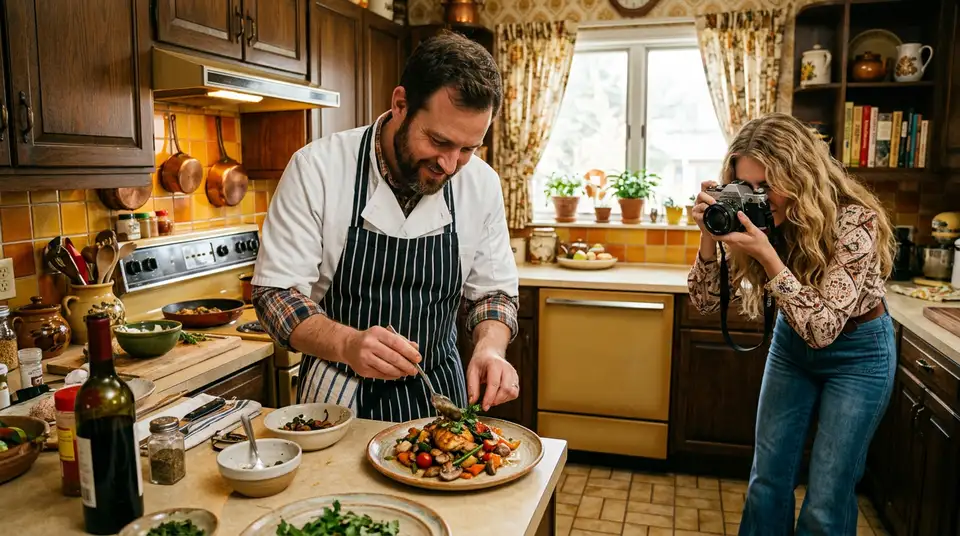
You posted a beautiful photo of tonight’s special. Golden light, perfect plating, a little steam rising off the risotto. It looked incredible.
83 likes. 2 comments — both from other restaurants. Zero reservations.
You spent 45 minutes on that photo. Tried three angles. Wrote a caption with the right hashtags. And the phone didn’t ring once because of it.
This is not a failure of effort. This is a failure of architecture.
The hamster wheel nobody talks about
Here is what social media companies will never tell you: you are building on rented land.
Your followers are not yours. Instagram owns that list. The algorithm decides who sees your food photos, and right now, it is showing your risotto to about 1-2% of the people who follow you. That is not a guess — that is Meta’s own data from 2024.
So if you have 2,000 followers, roughly 30 people saw that post. Of those 30, maybe 5 were actually thinking about dinner. Of those 5, how many clicked through to find your address, check the menu, and make a reservation?
The math does not work. The average restaurant Instagram post drives about 0.03 direct bookings. That is not a typo. Point zero three.
You are feeding the platform, not the business
Every hour you spend on Instagram is an hour you spend making Meta’s product better. Your beautiful food photos keep people scrolling. Your engagement keeps the algorithm happy. Your ad spend keeps their revenue growing.
Meanwhile, your dining room has empty tables on Tuesday nights.
This is not an argument against Instagram. It is an argument against Instagram as your primary strategy. There is a massive difference between using social media as a tool and depending on it as a foundation.
The real problem: you have no system
Most restaurant owners I talk to have the same setup. Instagram for marketing, maybe a Facebook page, a Google Business listing they set up three years ago, and a website that is either nonexistent or frozen in time.
None of these pieces talk to each other. There is no flow. A customer sees your food on Instagram, gets interested, then has to work to figure out where you are, what you serve, and how to book a table.
Every friction point is a lost customer. And right now, your “marketing” is mostly friction with nice photos on top.
What 77% of your customers actually do
Here is a number that should change how you think about this: 77% of diners visit a restaurant’s website before deciding where to eat. That is from OpenTable’s 2024 dining trends report.
Not your Instagram. Not your TikTok. Your website.
They Google your name. They land on your site. They check the menu, look at the hours, maybe glance at the location. And in those 30 seconds, they decide if they are coming tonight or going somewhere else.
If your website is a single page with your phone number and a stock photo of pasta — or worse, if you don’t have one at all — you are losing customers who were already interested. These are not cold leads. These are people who searched for you by name and got nothing useful.
The system: how the pieces actually fit together
A system is not complicated. It is just the right pieces connected in the right order.
Step 1: Your website captures the traffic
Every search, every Instagram click, every Google Maps tap — they all need to land somewhere that works for you, not for a platform. Your website is that place. It loads fast, it looks right on a phone, and it gives people exactly what they need: what you serve, when you are open, how to book.
This is not about having a “pretty website.” It is about having a functional one. A page that converts a curious browser into a seated customer.
Step 2: Your menu page does the selling
Your menu is your number one sales tool. Not a PDF. Not a photo of the paper menu. A real, searchable, mobile-friendly menu page that loads instantly and shows people what they are going to eat tonight.
86% of customers check the menu before visiting. If your menu page is a blurry PDF that takes 10 seconds to download and requires pinch-zooming on a phone, you are telling people to eat somewhere else.
Step 3: Booking works 24/7
A “call us for reservations” message at 11pm is a dead end. Your booking system — whether it is an embedded widget, a WhatsApp button, or a simple form — needs to work when the customer is ready, not when your host is at the stand.
Most restaurant decisions happen at 9pm on a couch. If your system is not ready for that moment, someone else’s system is.
Step 4: You bring them back
This is where most restaurants stop, and it is where the real money starts. A customer comes in once — great. But a customer who comes back every month is worth 10x more.
Email lists, WhatsApp broadcasts, a simple “get our weekly specials” signup. These are owned channels. Nobody’s algorithm decides whether your message gets delivered. You send it, they get it.
When the AI layer reads your order history and booking data, the weekly broadcast stops being one mass blast. It segments your list by what people actually order — the seafood-leaning regulars get the new oysters first, the cocktail crowd gets the wine pairing menu, the brunch families get the kids’ specials. Each segment gets a draft tuned to them in your voice. You approve in a couple of minutes. Open rates climb because the message lands like a personal note instead of a megaphone.
Restaurants that capture customer contact information see measurably higher repeat visit rates. This is not theory. This is what happens when you can actually reach people who already like your food.
Instagram is the entrance, not the building
Here is where Instagram fits in the system: it is the top of the funnel. It is where people discover you. A great food photo catches someone’s eye, they tap your profile, they click the link in bio — and they land on your website.
That is the handoff. Instagram’s job is to get attention. Your website’s job is to convert that attention into a reservation. Your email list’s job is to bring them back.
Instagram feeds the system. The system feeds the business. Not the other way around.
When you reverse this — when Instagram is the system — you are building your business on someone else’s platform, subject to someone else’s rules, at the mercy of someone else’s algorithm update.
What this looks like in practice
Let me paint the picture of a restaurant running a real system.
Monday morning: you update this week’s specials on your website. Takes 5 minutes. The menu page is live, searchable by Google, and visible to anyone who visits.
Monday afternoon: you take a photo of the new dish. Post it to Instagram with a link to the menu page. That is your content for the day — 10 minutes total.
Tuesday: 40 people visit your menu page from organic Google search. 15 come from Instagram. 8 come from Google Maps. 12 of those visitors book a table. You did not post anything today.
Wednesday: your weekly email goes out to 400 subscribers. “This week’s special: mushroom risotto with truffle cream.” Open rate: 35%. That is 140 people who saw your message — not 1-2% like Instagram, but 35%.
Thursday through Saturday: your dining room is full. Not because of one viral post, but because every piece of the system did its small job.
The shift: from content creator to business owner
The most successful restaurant owners I know spend maybe 20 minutes a day on social media. They spend their real energy on the food, the experience, and the operations.
They are not dancing on TikTok at midnight. They are not agonizing over hashtag strategy. They have a system that does the marketing work quietly, consistently, and on their terms.
Your website is the only digital asset you actually own. Your Instagram account can be disabled tomorrow — it happens to restaurants every week. Your email list, your website, your customer data — those are yours. Nobody can take them away or throttle their reach.
Start here
You do not need to rebuild everything at once. Start with these three moves:
This week: Check your website on your phone. If you would not book a table based on what you see, neither will anyone else.
This month: Get your menu online as a real web page, not a PDF. Make it easy to read on a phone. Include prices, descriptions, and dietary information. Your menu page is your best salesperson — let it do the work.
This quarter: Add one capture point. A “get our weekly specials” email signup, a WhatsApp link, anything that turns a one-time visitor into a repeatable connection. If you have QR codes on your tables, point them at your website — not a third-party PDF.
The goal is not to quit Instagram. The goal is to stop depending on it. Build the system first. Then let social media do what it is actually good at: getting new people to the front door.
Your system handles the rest.