Blog
The Website Is the System: Why Small Businesses Need More Than a Brochure Online
Published 2026-03-23
For the past decade, small businesses have been told the same story. Get on Instagram. Build a Facebook page. Run Google Ads. Post content. Engage with your audience. Grow your following.
So they did. Restaurants posted beautiful food photos. Gyms filmed workout clips. Spas shared relaxation tips. Real estate agents listed properties. Cooking schools uploaded class highlights. They showed up. They were consistent. They did the work.
And then the platform changed the rules.
Instagram cut organic reach to under 2%. Facebook throttled business page visibility unless you paid to boost. Google adjusted its algorithm and your listing dropped from page one to page three overnight. TikTok’s algorithm giveth and TikTok’s algorithm taketh away — sometimes in the same week.
Every one of those businesses built something valuable. But they built it on someone else’s land.
The rented land problem
When you build your business presence on a platform, you are a tenant. The platform is the landlord. And landlords can raise the rent, change the lease terms, or demolish the building whenever they want.
Your Instagram followers are not yours. They are Instagram’s users who have expressed mild interest in your content. The platform decides whether those people see your posts. Right now, the answer is: almost none of them do. The average business post reaches 1-2% of followers. You spent years building that audience, and the platform lets you talk to 2% of them for free.
Your Google Business reviews are not yours either. They live on Google’s servers, displayed according to Google’s rules, in Google’s interface. You cannot export them. You cannot move them. If Google changes how reviews are displayed — and they do, regularly — your social proof appears or disappears at their discretion.
Your Facebook page, your TikTok following, your Viator listing, your Airbnb Experience reviews. None of these are assets you own. They are assets you borrow. And borrowed assets can be recalled at any time.
This is not a theoretical risk. This is what happens to real businesses every week.
What you actually own
Here is the short list of digital assets that belong to you and cannot be taken away by a platform:
Your website. Your domain name. Your email list. Your WhatsApp contact list. Your customer database. Your content — the words, photos, and videos you create and host on your own infrastructure.
That is it. Everything else is rented.
And here is the critical difference: rented assets help you reach people. Owned assets let you keep them.
A thousand Instagram followers means you can maybe reach 20 of them on any given post. A thousand email subscribers means you can reach 350 of them with a single send — that is a typical 35% open rate. A thousand WhatsApp contacts means you can reach nearly all of them, instantly, with close to 98% open rates.
The math is not even close. Owned channels outperform rented channels by an order of magnitude. Not double. Not triple. Ten to fifty times more effective at actually reaching the people who said they want to hear from you.
The brochure website era is over
For a long time, “having a website” meant having a digital business card. Your name, your address, maybe a photo, a phone number. It was a checkbox on a to-do list. It sat there, static, collecting dust.
That era is over, and the businesses that have not caught up are paying for it every day.
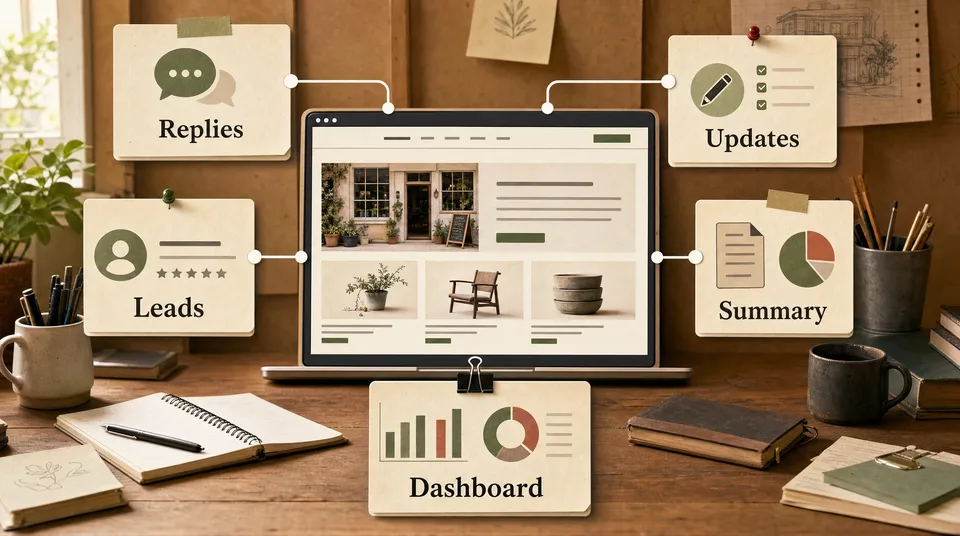
A modern website is not a brochure. It is an operating system. It is the hub that connects every part of your business’s relationship with customers — from the moment they discover you to the moment they come back for the third time.
Let me show you what this looks like, across five very different businesses.
The restaurant: from post to plate
A restaurant’s system starts with the thing every customer checks first: the menu. Not a PDF. Not a photo of the paper menu. A real, mobile-first menu page that loads in under two seconds and makes people hungry.
That menu page feeds into a booking system that works at 11pm on a Tuesday when someone is lying on their couch deciding where to eat tomorrow. No “call during business hours.” No “send us an email.” A button that says “Book a Table” and actually books a table.
The booking confirmation captures their email. Now you have permission to reach them. A week later, your Wednesday specials email goes out. They come back. They bring friends. Those friends check the menu on their phones via QR code at the table, and the cycle feeds itself.
The restaurant that runs this system does not need to post on Instagram every day to stay full. Instagram becomes the discovery layer — it gets people to the door. The website does the rest.
The gym: from click to commitment
A gym’s system solves a very specific problem: the gap between someone clicking an ad and someone signing a membership. That gap is where most gyms lose 90% of their marketing budget.
The fix is a pipeline. The ad points to a landing page — not the homepage, a dedicated page built for one purpose. The page captures a name and phone number. An automatic WhatsApp message goes out within minutes. The front desk calls within the hour.
That call qualifies the lead and books a specific visit — not “come whenever,” but “Thursday at 6pm with Marco.” The visit is personalized because the trainer already knows their goals. The follow-up is automatic. Three touches over seven days, all feeling personal, all driving toward a membership.
The gym’s website is the backbone of this entire pipeline. Every program page, every trainer profile, every class description is designed to move someone from browsing to committed. The free trial is structured as the first step of a journey, not a casual drop-in.
Without the website, there is no system. Just ads pointing at a brochure, leads falling into an inbox, and money disappearing.
The spa: from browsing to booking
A spa’s biggest challenge is trust. The services are intimate, personal, and often expensive. A first-time client is not just spending money — they are trusting you with their body and their time. That is a high bar to clear with a bullet-point list of treatment names and prices.
The spa system starts with treatment pages that build confidence. Not “Swedish Massage — 60 min — ฿3,500.” Instead, a page that explains who the treatment is for, what the experience feels like, what results to expect, and what real clients have said about it.
Visual content does the heavy lifting here. Real photos of the space, the treatment rooms, the therapists at work. Atmosphere sells in this industry. A visitor needs to feel calm and trusting before they even walk through the door.
The booking flow needs to be effortless — two clicks to a confirmed appointment. And the follow-up sequence handles the rest: a confirmation with preparation tips, a post-visit thank you, and a nudge toward package deals that turn one-time visitors into regulars.
The website is the trust bridge. Without it, a spa is asking people to spend ฿6,500 on a two-paragraph description and a stock photo. With it, the booking feels like a natural next step.
The real estate agency: from listing to lead
Real estate has a unique problem: everyone puts their properties online, but almost nobody captures the lead. Listings go up on portals — Zillow, Rightmove, whatever platform dominates your market — and the agent waits for the phone to ring.
But the portal owns that traffic. The portal shows the visitor four other agents alongside your listing. The portal captures the inquiry and routes it however they please. You are competing for your own client on someone else’s platform.
The system starts with your own website as the primary listings hub. Every property has a dedicated page with professional photos, floor plans, neighborhood context, and a clear inquiry form. The form captures not just contact information but intent — are they buying? Renting? Investing? What is their timeline?
That qualification data flows into a follow-up pipeline. Serious buyers get a call within 30 minutes. Browsers get added to a property alert list. Investors get market analysis emails. Each path is designed for the specific type of lead.
The conversion funnel does not depend on portal algorithms or third-party lead quality. The website generates its own leads, qualifies them automatically, and routes them to the right agent. The portal becomes a supplement, not the foundation.
The cooking class: from search to experience
A cooking school’s entire business model depends on being found by people who are not in the same country yet. 74% of travelers book activities before they arrive at their destination. If you are not showing up in that search, you do not exist.
The system starts with SEO — landing pages that rank for “Thai cooking class Chiang Mai” or “pasta making class Rome” or whatever your specific combination of cuisine and city is. These pages are not brochures. They are conversion tools with storytelling, real photos, testimonials, and a booking button.
The booking page is an experience funnel. It does not list features. It walks the visitor through the morning — the market, the kitchen, the hands in the mortar, the meal shared around the table. By the time they reach the booking button, they have already imagined themselves there.
After the class, the system keeps working. A follow-up email with recipes and a class photo. A request for a Google review that boosts future search rankings. A referral link they can forward to friends. Every student becomes a marketing channel — not because you asked them to promote you, but because you gave them something worth sharing.
The pattern across every vertical
Look at these five businesses. Different industries. Different customers. Different price points. But the system underneath is identical.
Discovery: The customer finds you through search, social media, or a referral. This is the top of the funnel. It happens on external platforms — and that is fine. Platforms are good at discovery.
Conversion: The customer lands on your website. A dedicated page — not a homepage, a specific page designed for their specific intent — gives them everything they need to say yes. They book, they inquire, they sign up. The website captures them.
Retention: After the first transaction, the system keeps working. Email follow-ups. WhatsApp messages. Return visit incentives. This happens on owned channels — not platforms. You reach them directly, on your terms, with no algorithm deciding whether your message arrives.
Amplification: Happy customers leave reviews, share photos, forward referral links. This feeds back into the discovery phase. The system becomes self-reinforcing.
This is not complicated. It is just intentional. Every step connects to the next. Nothing depends on a single platform. Nothing breaks if an algorithm changes.
The future: websites as operating systems
Here is where this is heading, and it is worth paying attention to.
Websites are evolving beyond marketing tools. They are becoming lightweight business operating systems. A restaurant website that handles menus, bookings, customer data, email campaigns, review management, and staff scheduling — all from a single dashboard. A gym website that tracks leads, automates follow-ups, manages class schedules, processes payments, and reports on conversion rates.
The technology already exists. What is changing is accessibility. Tools that cost ฿18,000 a month five years ago now cost ฿1,800 or are built into the website itself. Payment processing, CRM functionality, email automation, analytics — these layers are collapsing into the website.
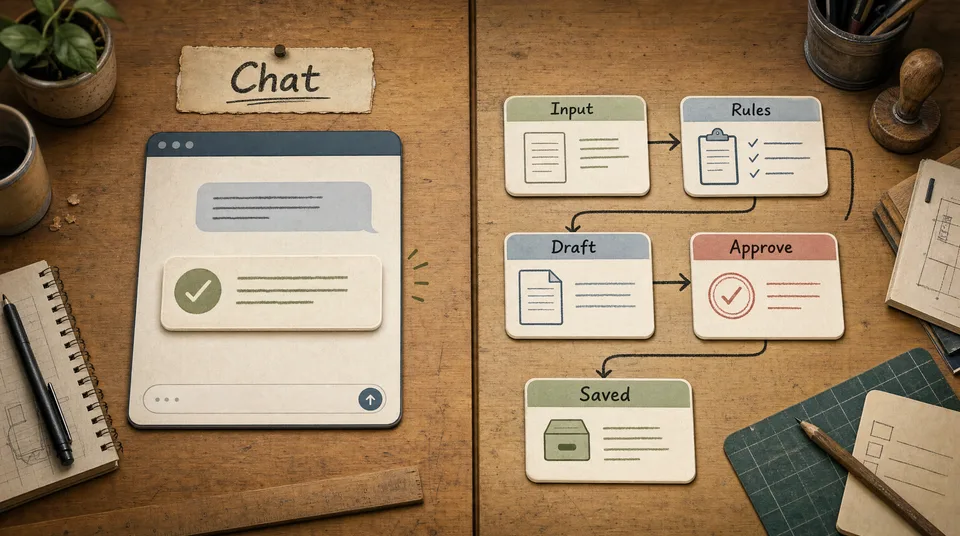
The newest layer is AI. Not as a feature label, but as a working part of the system: drafting review replies in your voice, classifying inbound messages by intent, summarising the week’s bookings into a single paragraph, predicting which members are about to lapse. The same system that captures and converts also reads, drafts, and routes — so a small team operates like a big one without hiring a big one.
This means the gap between businesses that have a system and businesses that have a brochure is going to widen dramatically. The system-builders will operate with less friction, more data, and better customer relationships. The brochure-holders will keep posting on Instagram and wondering why the phone is not ringing.
The choice
Every business faces the same fundamental decision about its digital presence. You can build on rented land or you can build on owned land.
Rented land is easier to start. The platforms give you tools, audiences, and reach — in exchange for control. They decide who sees your content, how your business appears, and how much you pay for access to your own audience. The terms change constantly and you have no vote.
Owned land takes more effort upfront. You need a real website, not a template. You need content that ranks. You need systems that capture, convert, and retain. But once it is built, it is yours. Nobody can throttle your reach. Nobody can raise your commission. Nobody can shut it down.
The platforms still matter. Use Instagram for discovery. Use Google Ads for targeted reach. Use aggregator platforms for incremental bookings. These are powerful tools when they serve your system.
But do not confuse the tools with the foundation. Instagram is a channel. Your website is the system. One is rented. The other is yours.
This is what we build
At Art of Web, we do not build websites. We build digital systems for real businesses.
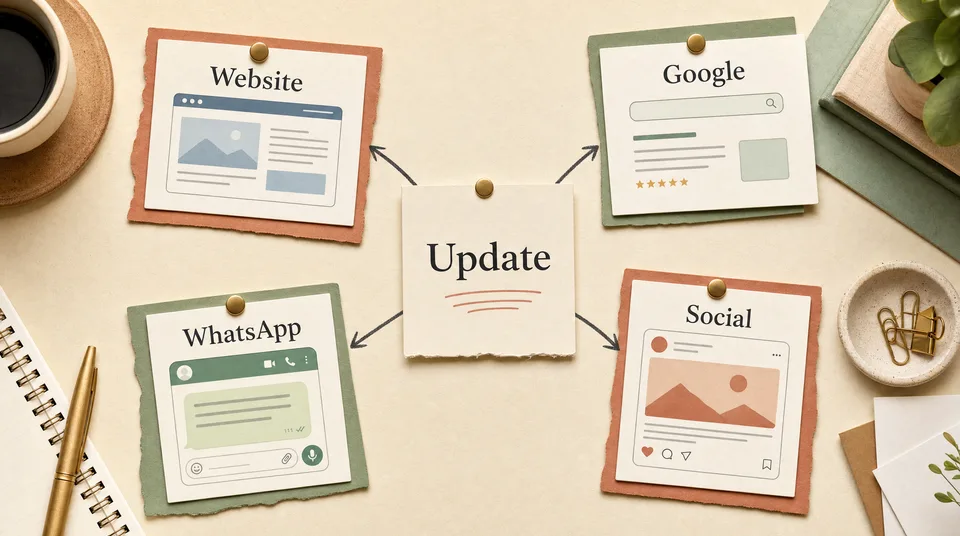
A restaurant owner should be able to update tonight’s specials in 30 seconds and know that the change flows through to the QR menus, the website, and the Google listing. A gym owner should be able to see exactly where leads drop off and fix that specific step. A spa owner should be able to fill next week’s slow spots with a single WhatsApp broadcast to past clients. A real estate agent should wake up to qualified leads in their inbox, already sorted by intent and timeline.
That is what a system does. It takes the complicated, repetitive, error-prone work of running a business and makes it automatic. It turns a website from a cost center into an engine.
You have spent enough years building on rented land. Your customers are searching for you right now — on Google, on their phones, from their couches. They are ready to book, to buy, to commit.
The only question is whether they land on a platform that takes a cut and keeps the relationship, or on a system you own that captures every opportunity.
Build the system. Own the relationship. Keep the revenue.
Everything else is rent.